
What’s New in GibbsCAM 2027
More Clarity. More Control. More Confidence.
September 21, 2026
GibbsCAM 2027 brings a new level of clarity, control, and efficiency to CNC programming. With enhanced workspace visualization, faster simulation review, expanded Advanced 3D Machining capabilities, improved turning and drilling workflows, and new multi-axis strategies, the latest release helps programmers validate setups earlier, streamline everyday tasks, and machine complex parts with greater confidence.

Smarter everyday programming
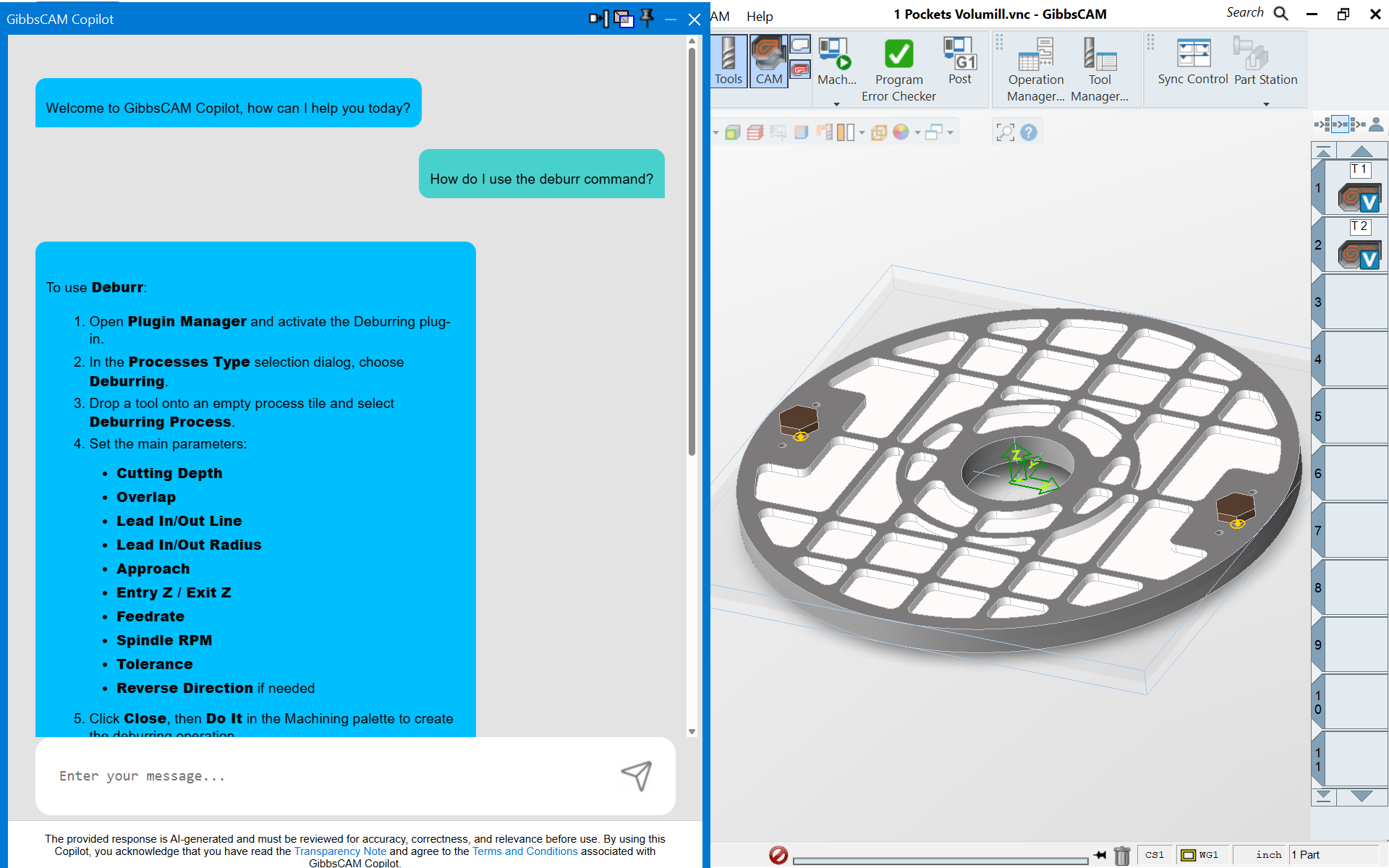
Enhanced GibbsCAM Copilot responses provide clearer guidance, and improved resource access, including links to videos that jump directly to the topic being discussed.
GibbsCAM 2027 introduces several enhancements that make daily programming more efficient, more transparent, and easier to control. Improved GibbsCAM Copilot responses, image support, and source reference links help users find and verify information more quickly.
At the same time, workflow improvements such as Undo/Redo for machine markers, scalable points, labels, and coordinate system markers, plus new Multi-Select and Range-Select modes, reduce friction in common programming tasks and make the workspace easier to adapt to different parts, displays, and user preferences.
Greater Setup Clarity in the Workspace
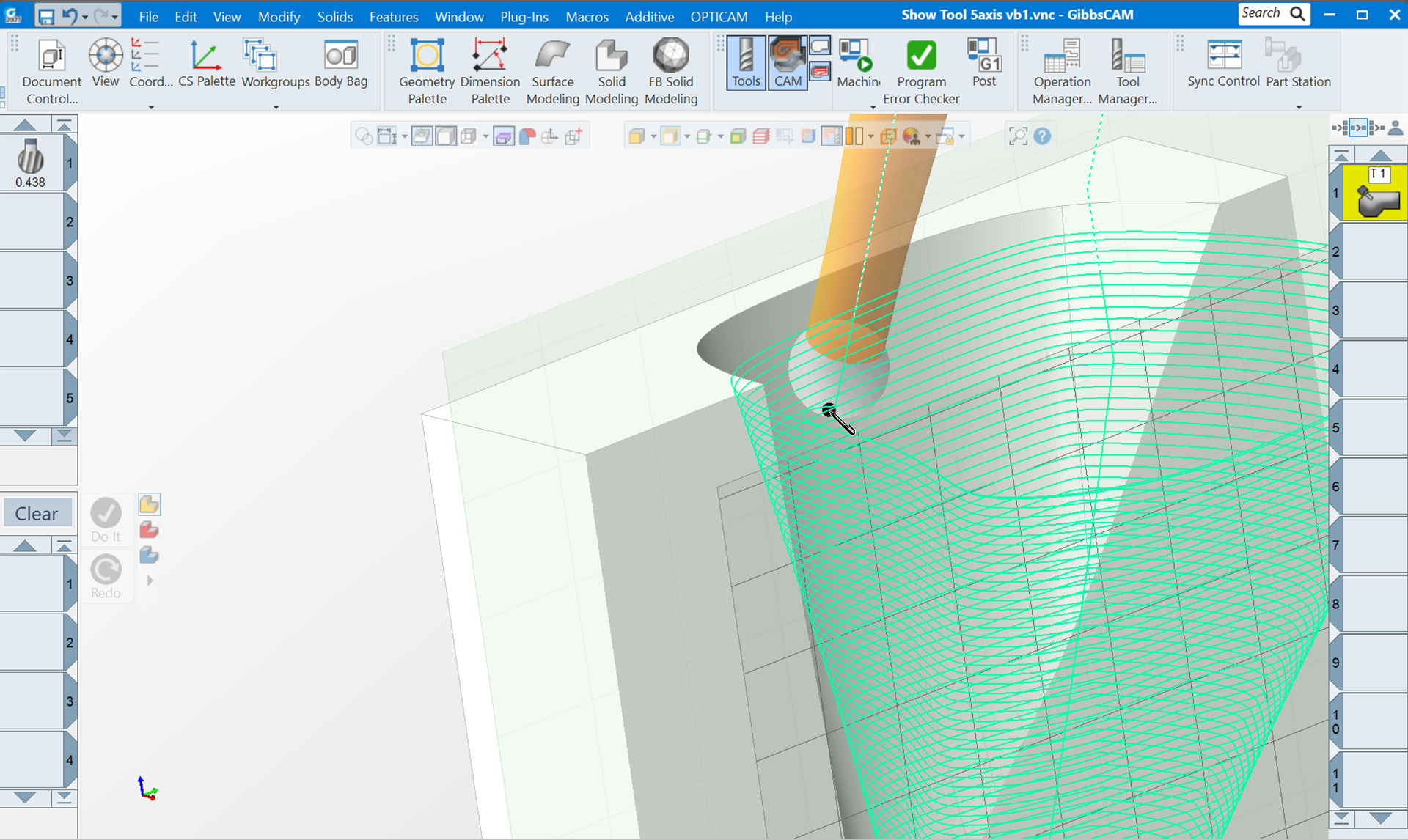
The new Tool on Toolpath display enables interactive toolpath review within the workspace, helping programmers validate setups before simulation.
GibbsCAM 2027 brings more process information directly into the programming workspace, helping users understand setups earlier and with less context switching. Programmers can now display the tool directly on the toolpath, review in-process stock for selected operations, and visualize the machine assembly, fixture, and part setup without launching Machine Simulation.
Combined with advanced material rendering for parts, tools, fixtures, and machine components, these enhancements provide a clearer and more realistic view of the complete machining environment throughout the programming process.
Faster Simulation Review and Cleaner Process Validation
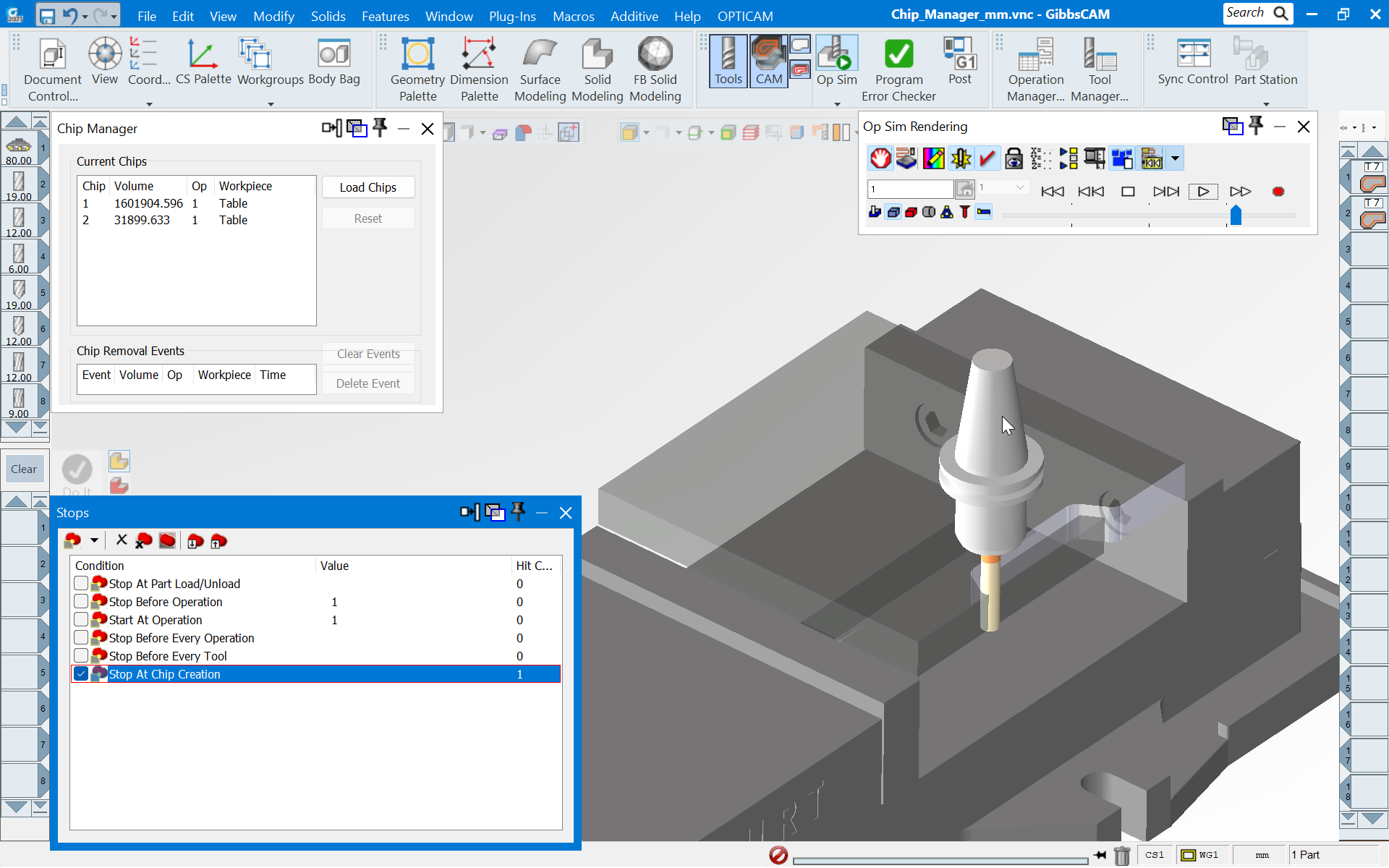
The new Chip Manager automatically handles separated stock remnants, improving simulation clarity and making it easier to review machining results.
Simulation review becomes faster and more focused in GibbsCAM 2027. The new Reverse-Rewind function allows users to move backward through a simulation and review previous machining stages without restarting.
The new Chip Manager and Stop at Chip Creation option help identify, manage, and remove detached chips or remnant bodies during simulation, keeping the view cleaner and making it easier to evaluate the relevant machining steps and the finished part condition.
Flexible Hole, Tool, & Turning Workflows
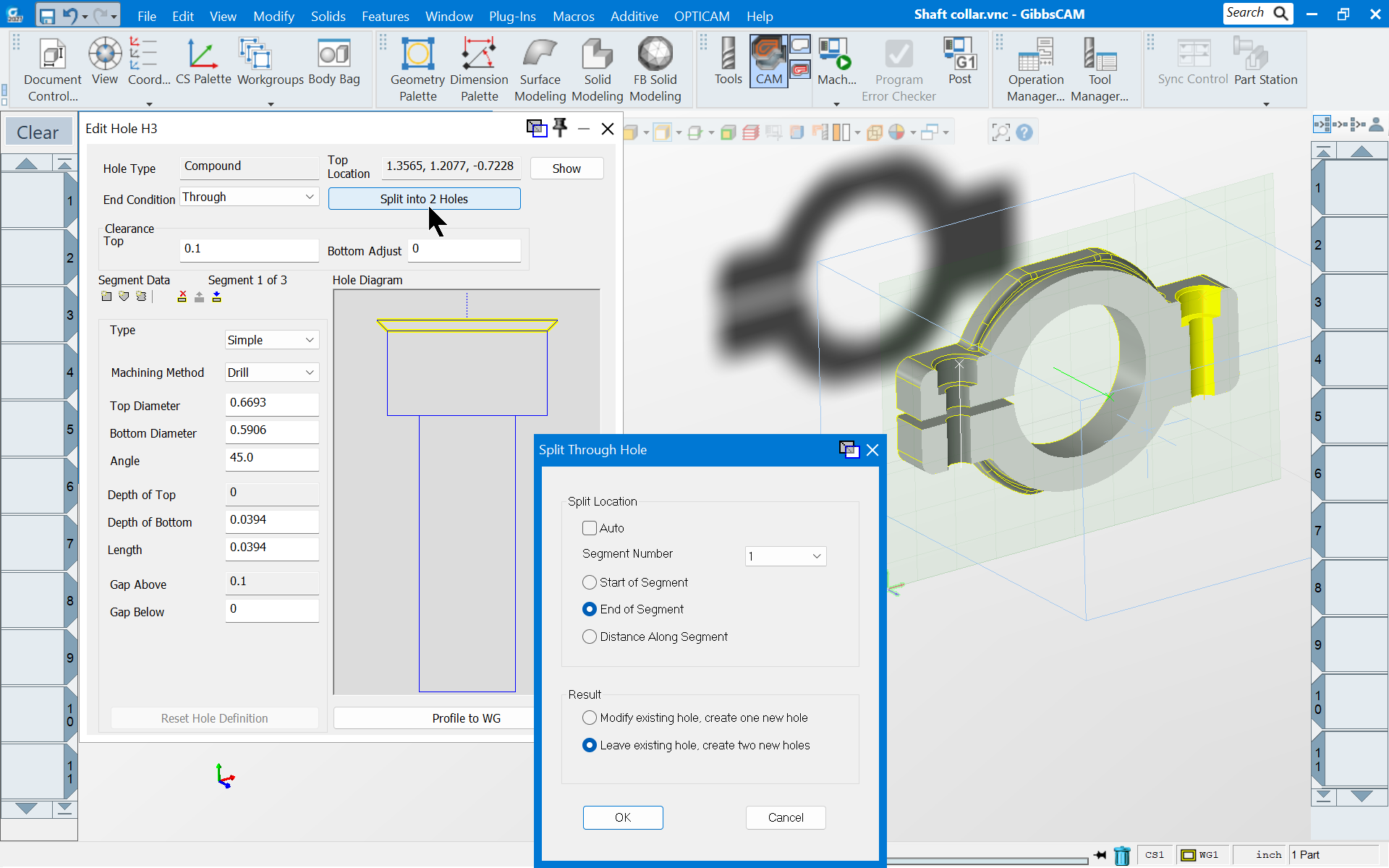
Easily divide complex hole features into separate machining segments, providing more control over programming and process planning.
GibbsCAM 2027 expands flexibility in several core programming areas. Hole Manager can split through-hole features into multiple hole features, giving users more control over complex hole configurations, while hole processes can now also be applied to connector and terminator points. Tooling workflows are streamlined with direct access to the Tool Dialog from the Tool List Editor, and spindle rotation direction is displayed directly in the tool preview balloon.
For turning, Oscillating Thread Turning delivers the benefits of a proven threading strategy while maintaining a familiar workflow and continued compatibility with existing processes and recommended cutting data from CoroPlus Tool Library.
Advanced 3D: Faster, Easier, More Accurate
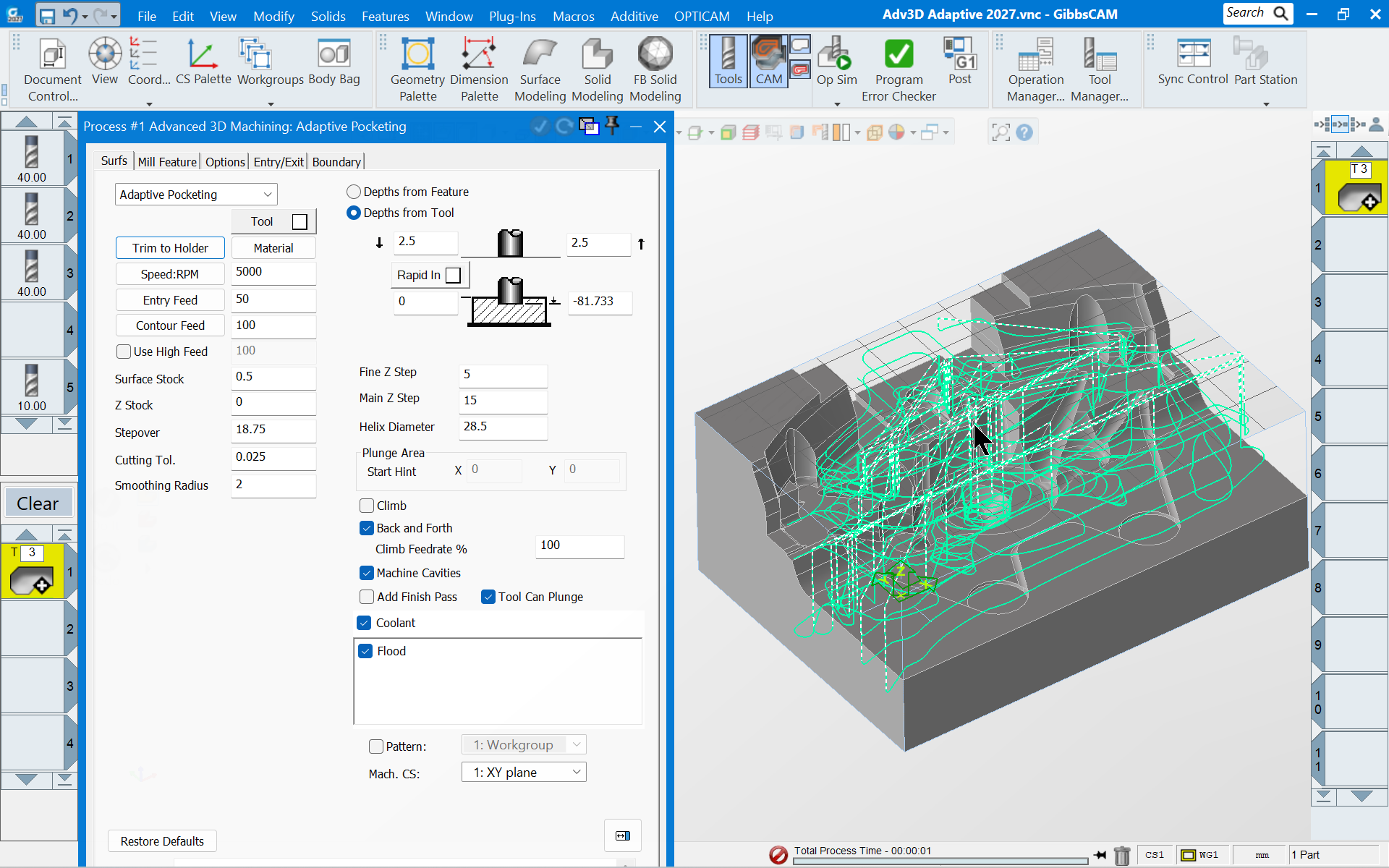
Adaptive Pocketing has been redesigned, delivering more efficient tool engagement, simplified controls, enhanced toolpath quality, and improved machining performance.
Advanced 3D Machining continues to evolve in GibbsCAM 2027 with enhancements focused on machining efficiency, ease of use, and part quality. New and improved strategies such as optimal machining angle selection, single-cut flat machining, adaptive pocketing controls, constant stepover improvements, helical linking, smart trimming, and automated cleanup options help reduce unnecessary tool movement and programming effort. Additional usability improvements, expanded context help, refined toolpath controls, profile smoothing, corner cleanup, drive curve control, and improved holder awareness help programmers generate cleaner, more consistent toolpaths with less manual adjustment.
Expanded Multi-axis and 5-Axis Capabilities
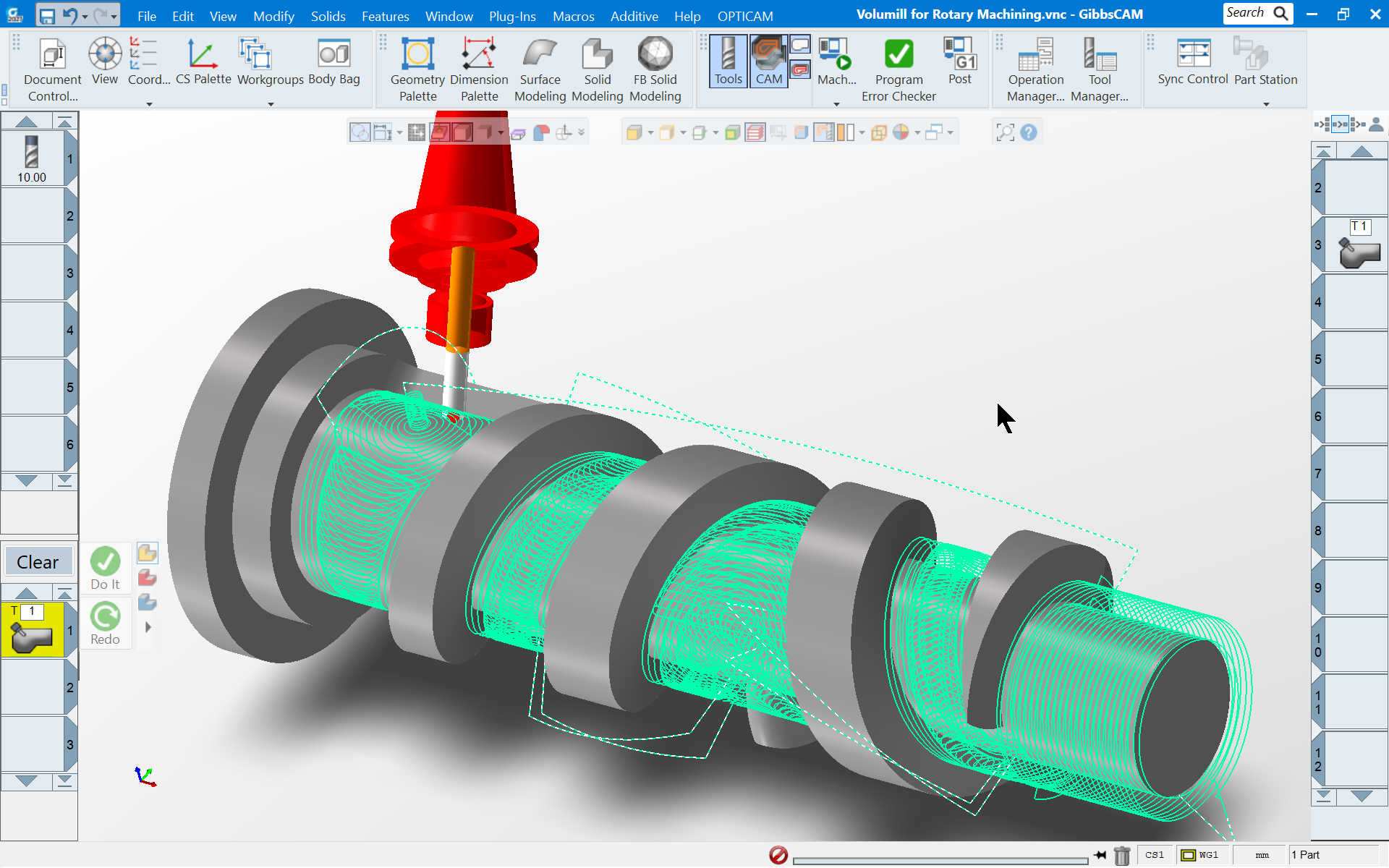
VoluMill® is now available as a rotary roughing strategy, delivering efficient material removal and optimized tool engagement.
GibbsCAM 2027 extends multiaxis and 5-axis machining with new capabilities for roughing, finishing, and deburring. VoluMill technology is introduced as an additional strategy within rotary machining to support efficient material removal and consistent cutter engagement. Geodesic Morph finishing gains intermediate guide curves for greater control over toolpath flow, while Multiaxis Finishing adds new capabilities such as Bull Nose support for Wall Finishing, Offset Spiral strategies in Rotary Finishing, Constant Z-Cut finishing options, and expanded checksurface controls. Deburring also becomes more selective, with options to include or exclude holes and vertical edges based on machining needs.
Bringing MFG Data to the Shop Floor
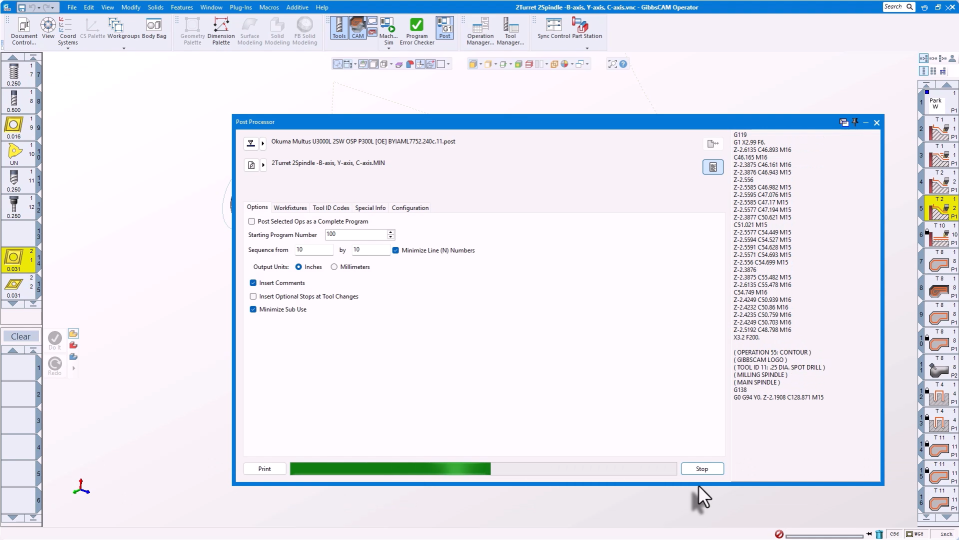
With the new GibbsCAM GO Operator users can make approved process adjustments, generate NC code, and prepare manufacturing data for production.
Although introduced shortly before the release of GibbsCAM 2027, GibbsCAM GO Operator is highlighted here as a significant addition to the GibbsCAM ecosystem. GibbsCAM GO Operator extends manufacturing access beyond the programming department. Building on GibbsCAM GO Viewer, it allows manufacturing engineers and shop floor personnel to prepare production data, adjust approved processes, generate NC code, and communicate manufacturing information to CNC machines without requiring a full GibbsCAM programming license. This helps streamline production workflows while preserving centralized control over toolpath creation and editing.
